Space to think.
Your mind holds a few ideas at a time. Plant the rest on one canvas, see how they connect, and watch them grow.
Neural Garden is in closed beta. Signing in puts you on the waitlist; invites go out in small batches.
Try the canvas
Double-click or double-tap to plant a thought. Select a card, then drag from its + to connect.
Think visually
See what's on your mind
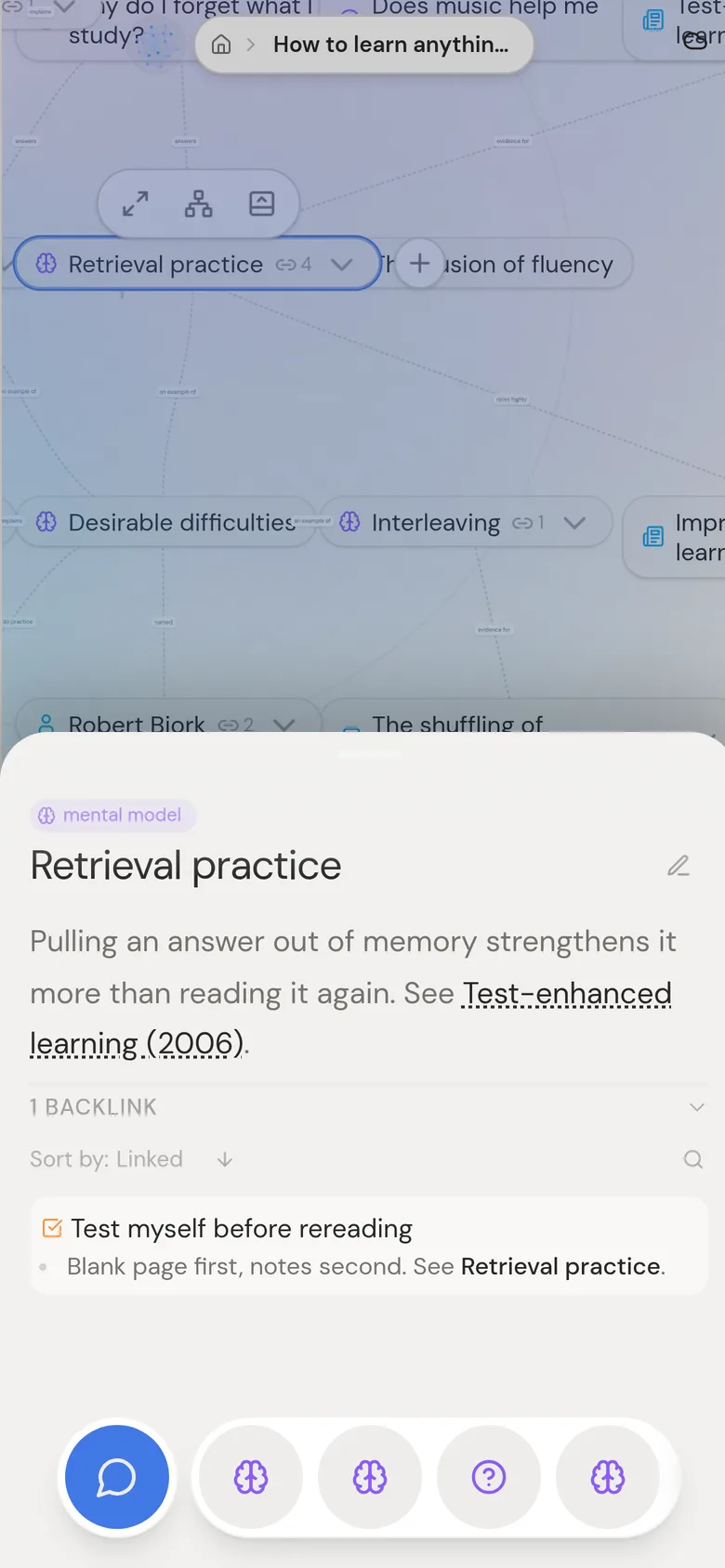
Every thought gets a card and a place of its own, so the whole problem stays in view while you work on it.
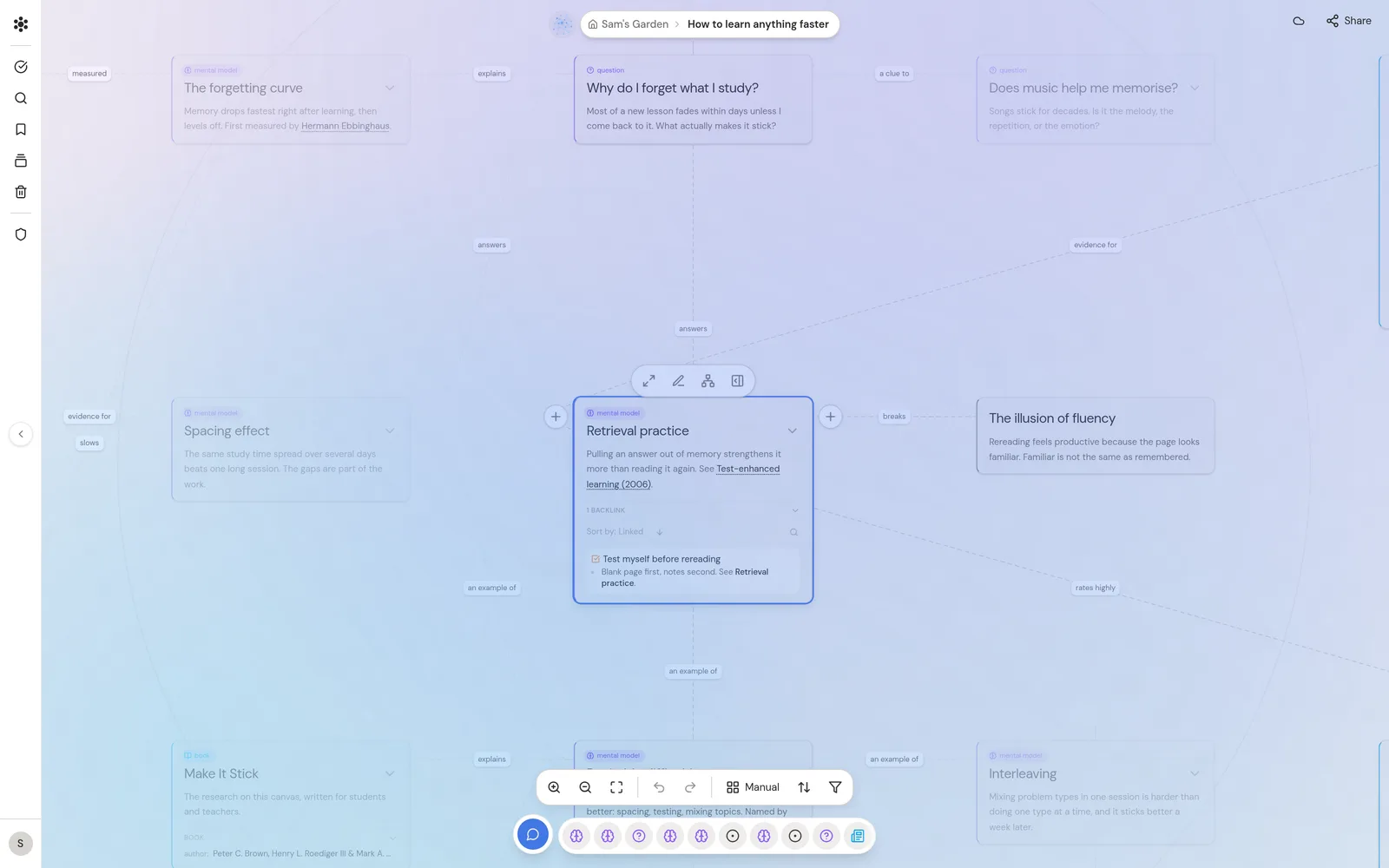
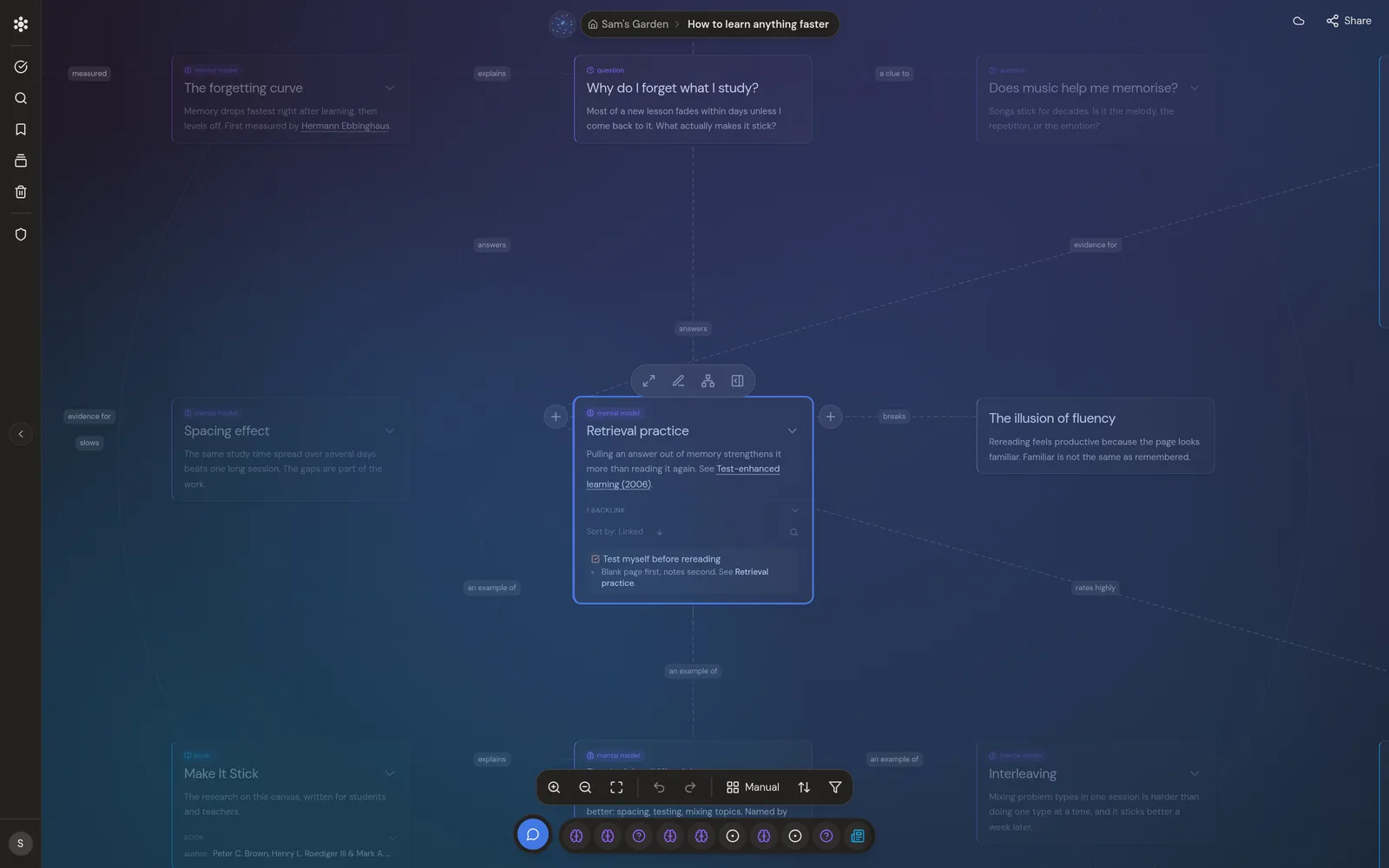
Place. Put a thought where it belongs, next to the ideas it goes with.
Connect. Draw a line between two thoughts and name how they relate.
Nest. Drop a thought into another, or open any thought as a garden of its own.
The research
Thinking outside your head
Why we believe a canvas helps you think, in the researchers' own words.
“The magical number 4 in short-term memory”
Working memory holds about four things at once. Everything past that needs somewhere to go.
“Where does the mind stop and the rest of the world begin?”
A notebook you rely on becomes part of how you think. A garden is that notebook, with room to spread out.
“Why a diagram is (sometimes) worth ten thousand words”
Laid out in space, the links between ideas are there to see instead of worked out in your head.
Share
Your mind is a black box, even to you
It's hard to know what you think, and harder to show someone else. Once it's on the canvas, you can see it, share it, and give the AI something clear to work with.
With people. Share a garden by link, list it in the gallery, or invite others to think on it with you.
With the AI. Every suggestion starts from your garden: the thought, what it connects to, and the goal you set. The clearer the garden, the better the suggestions.
Your key. Claude, OpenAI, Grok or a local Ollama. Your key is stored in your browser, never on our server.
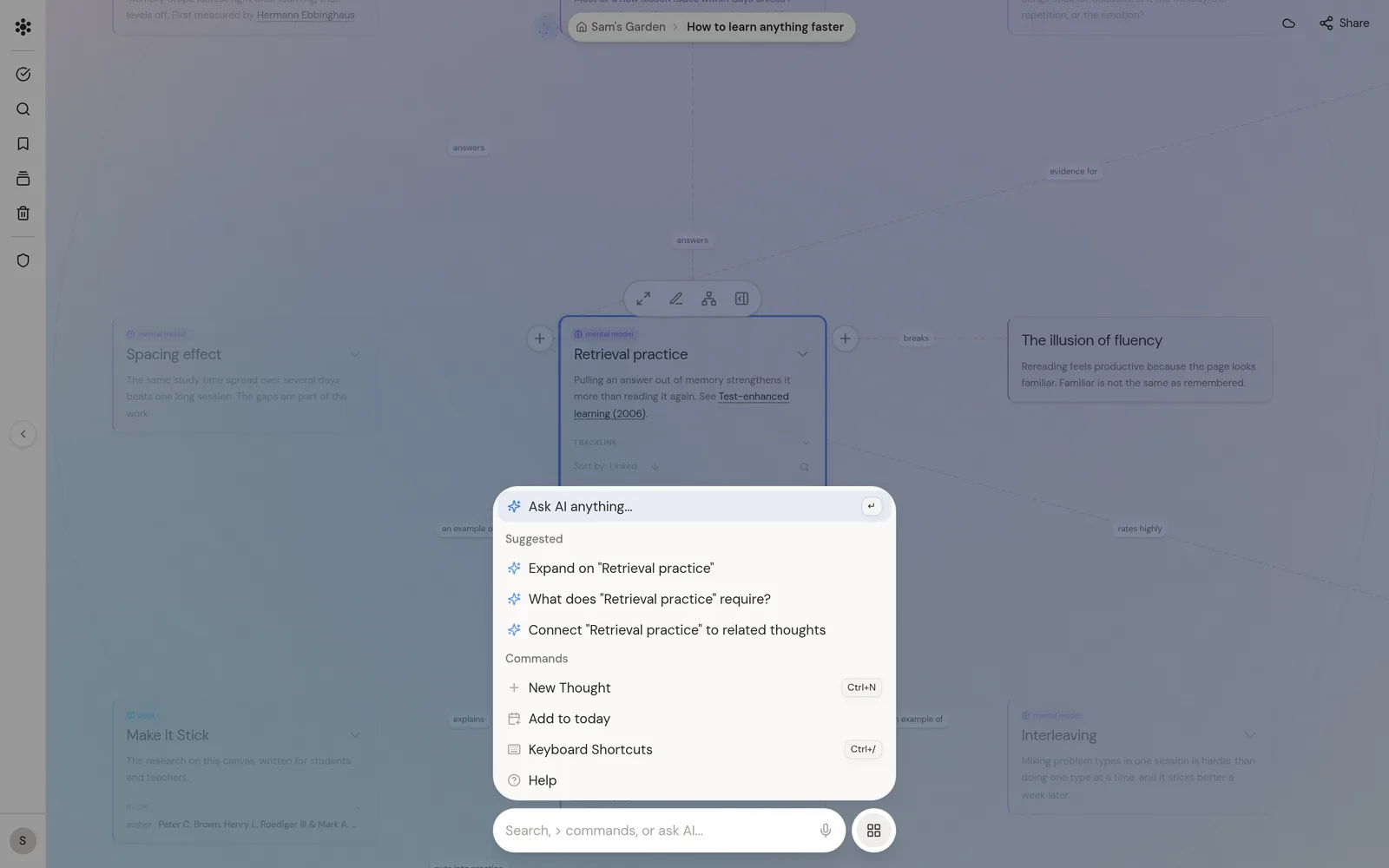
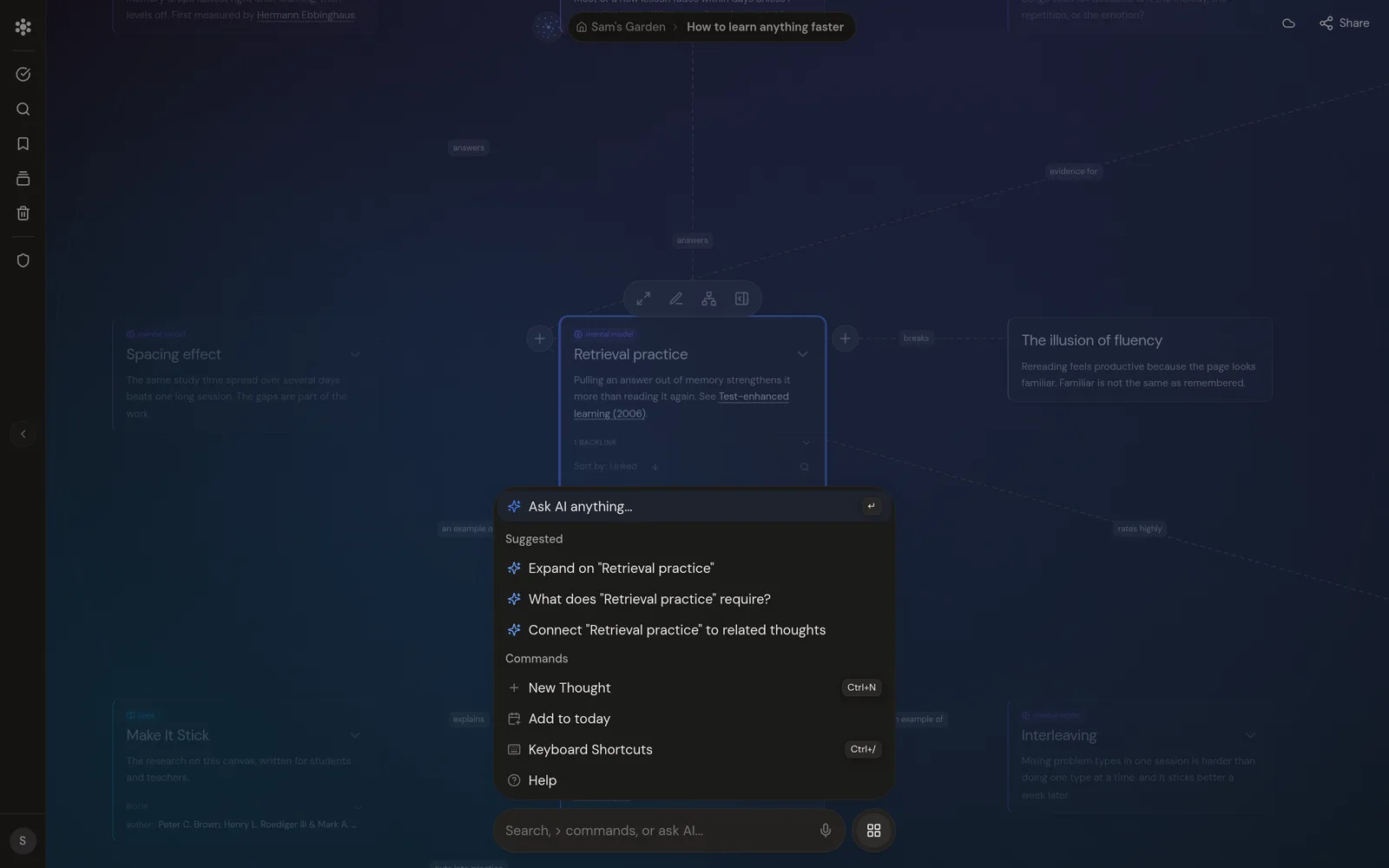
Come back to it
Find it where you left it
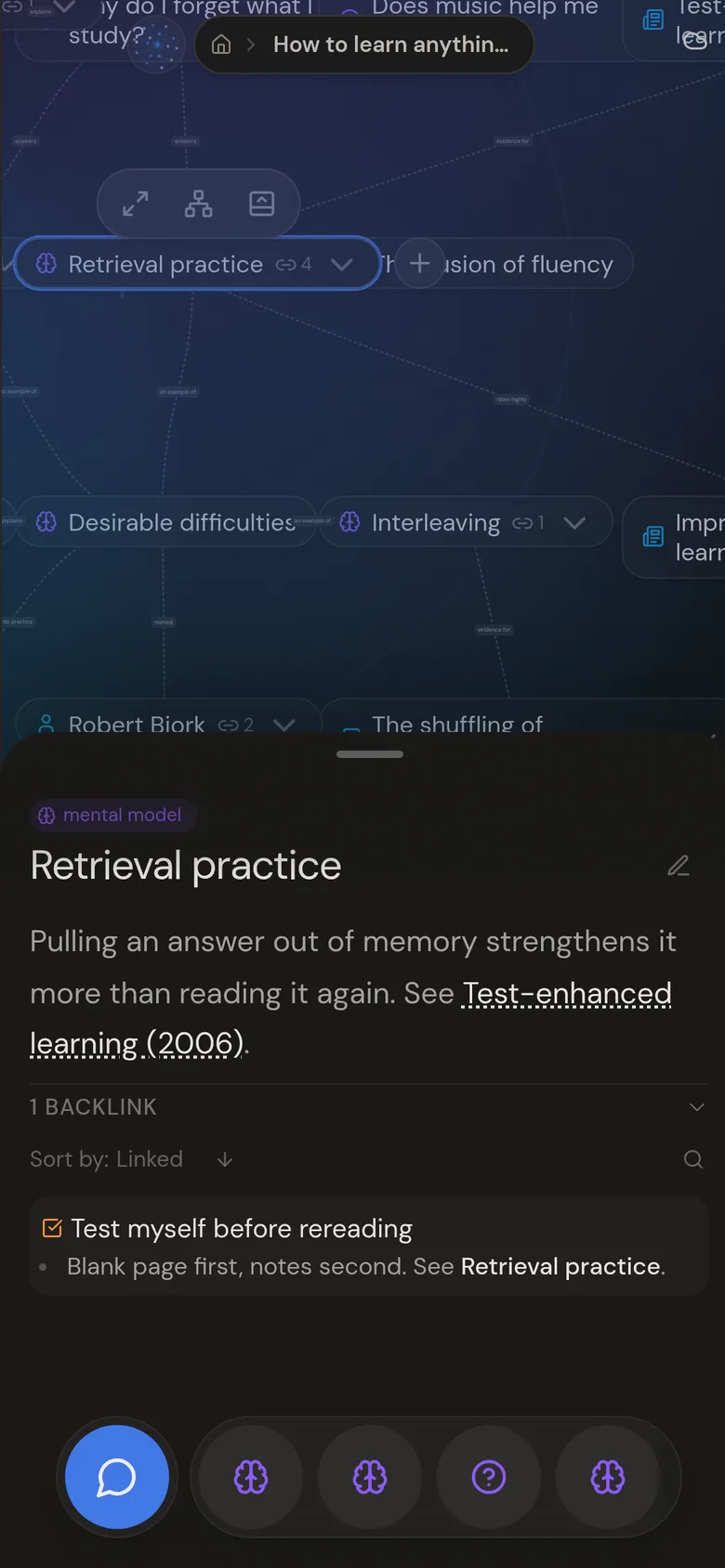
Capture a thought on your phone the moment it comes. Your gardens sync to your account, so it's there when you come back knowing more.
Gallery
See how others think
Gardens people chose to publish. Open one, look around, and copy it into your own as a starting point.
Make space to think.
Neural Garden is in closed beta. Signing in puts you on the waitlist; invites go out in small batches.
Join the beta